

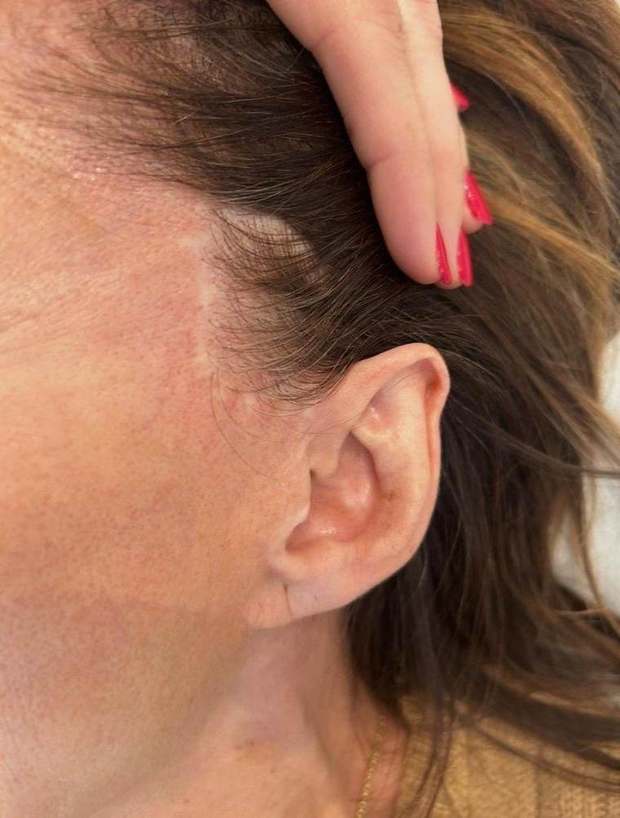
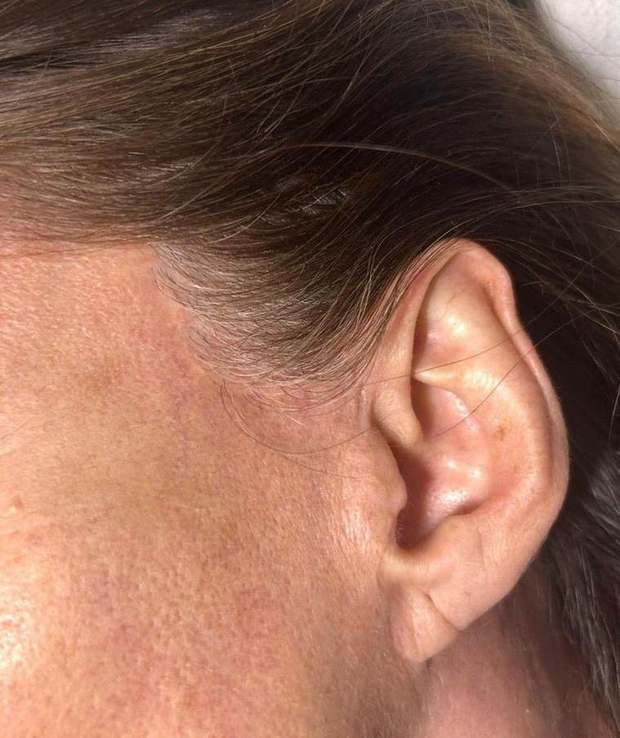
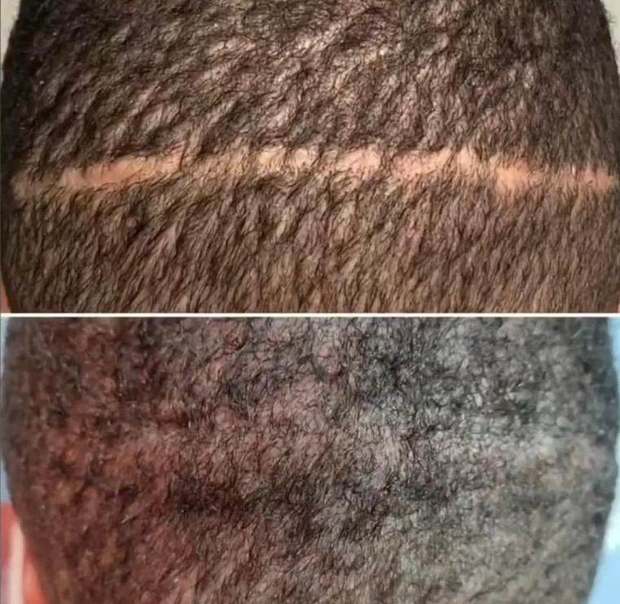
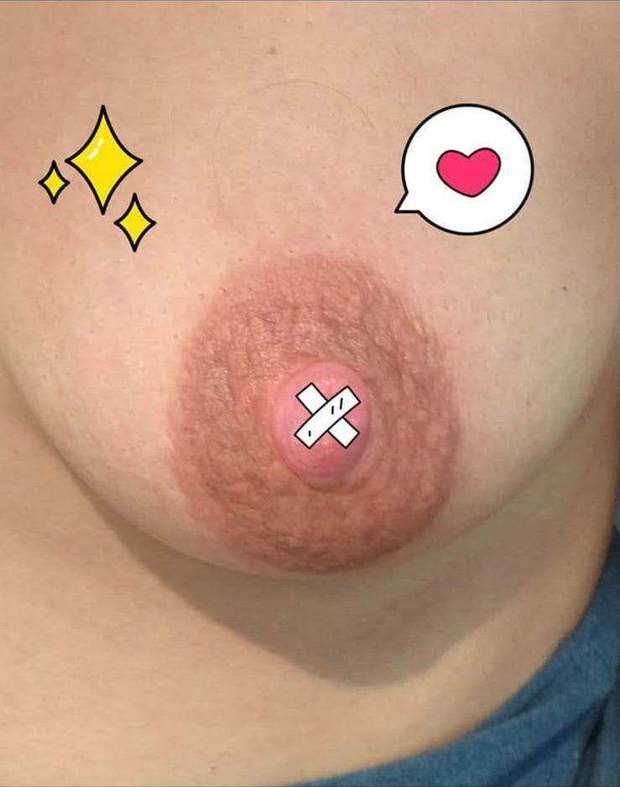
A scar is noticed less for its texture than for its colour. That is where all the work lies: laying down pigment tone on tone until the mark blends into the skin around it and stops drawing the eye.
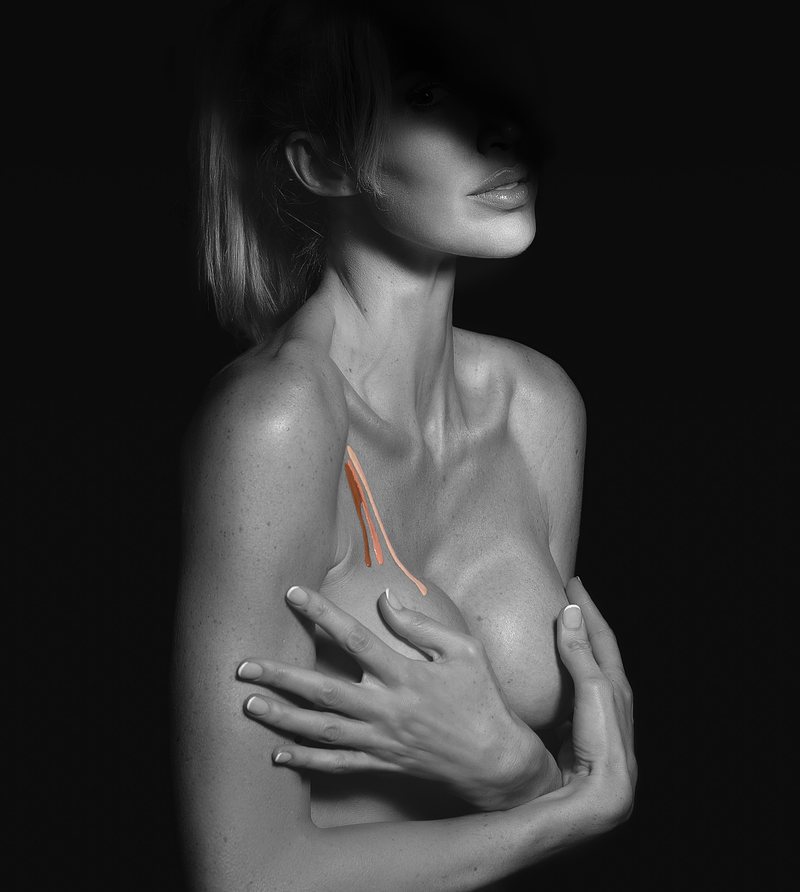
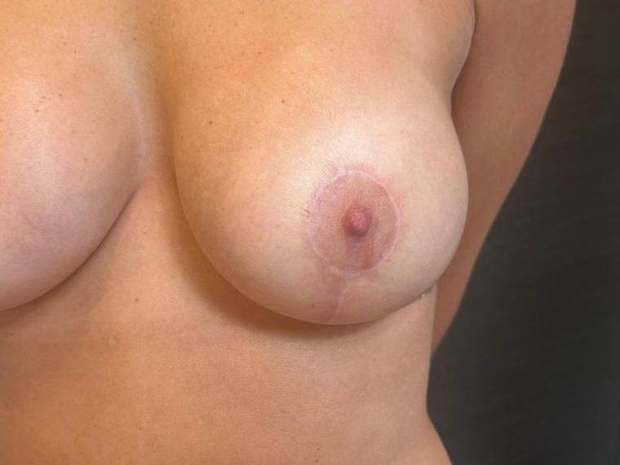
An augmentation, a reduction or a lift leaves fine but visible marks: the edge of the areola, the fold beneath the breast, the T-shaped scar of a reduction. Medical dermography conceals them by softening differences in skin colour.
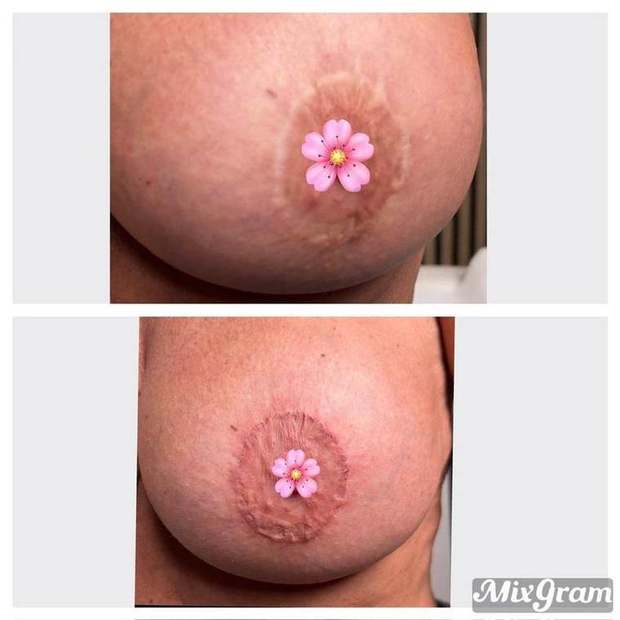
The pigment does not remove the scar: it gives it back the colour of the skin around it, so that the eye no longer sees it. On the areola, the work also redraws the contour where surgery has distorted it.
Allow at least a year after surgery before the first session: the scar needs to be mature, supple and stable in colour.
The same technique applies far beyond the breast. A pale, shiny or discoloured scar is noticed above all for its contrast with the surrounding skin: it is that contrast the pigment erases.
The field is wide: the aftermath of an accident or a burn, a caesarean scar, the marks of an operation, a skin graft, and congenital differences too. Every scar is assessed on its own — its texture, its relief, its colour.
Not all of them lend themselves to camouflage: a keloid scar, still red or noticeably raised, calls for waiting, or for another treatment first. The first appointment is what decides.
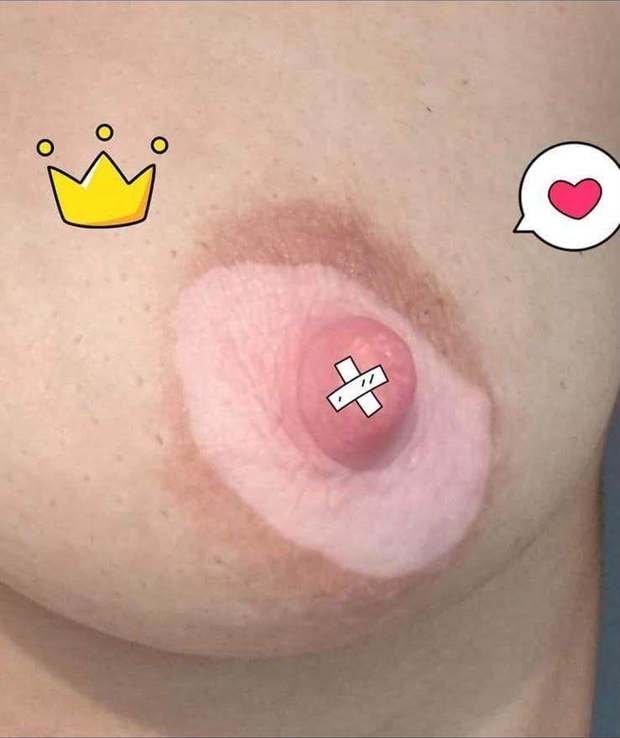
Vitiligo is a loss of pigment, not a scar: the skin is intact, it is the melanin that is missing. The approach is therefore different, and so is the technique.
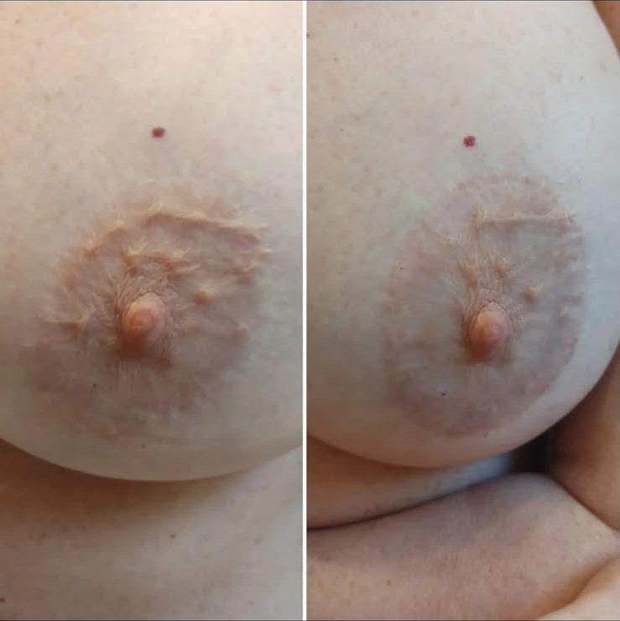
On the affected area, pigment is laid down tone on tone to restore the missing colour and erase the contrast with the surrounding skin. On the areola, the result gives the breast back a single, even colour.
Every skin responds differently: the shade is mixed in front of you and confirmed by a patch test beforehand. As vitiligo is a changing condition, a dermatologist’s opinion is required before any session, and the area must have been stable for several months.